

History of the Stoa: The Origins of Stoic Philosophy 📜
From Ancient Greece to Roman Excellence
The history of the Stoa is a remarkable journey of philosophical growth and cultural influence. Founded by Zeno of Citium in the 3rd century BCE, Stoicism evolved into one of the most enduring schools of thought. Its principles, rooted in rationality and virtue, transcended Ancient Greece and flourished in Rome, leaving a legacy that continues to inspire people worldwide. Explore how Stoicism emerged, evolved, and shaped its era.
The Beginnings of the Stoa: Zeno and His Successors
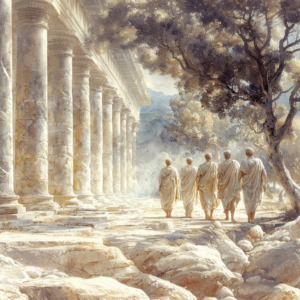
Stoicism was born in Athens, where Zeno of Citium taught his philosophy in the Painted Porch (Stoa Poikile). Drawing on the teachings of Socrates and the Cynics, Zeno created a philosophy that emphasized ethics, logic, and natural law.
After Zeno, the school was led by thinkers like Cleanthes, who expanded Zeno’s teachings, and Chrysippus, whose systematic approach firmly established the framework of Stoic philosophy. Chrysippus is often credited with solidifying Stoicism as a comprehensive philosophical system.
The Middle Stoa: Bridging Philosophies
During the Middle Stoa, philosophers like Posidonius and Panaetius of Rhodes brought Stoicism into the Roman world. Panaetius adapted Stoicism for Roman sensibilities, making it accessible to the ruling elite. Posidonius further enriched Stoicism by integrating aspects of Platonic and Aristotelian thought, broadening its appeal and practical application.
The Late Stoa: Philosophy of Leaders and Scholars
In its later phase, Stoicism reached new heights through the works of Seneca, Epictetus, and Marcus Aurelius. Seneca emphasized ethics and personal responsibility, Epictetus inspired students with his teachings on control and freedom, and Marcus Aurelius exemplified Stoicism as a way of life through his reflections in *Meditations*. Their contributions brought Stoicism from academic circles into the lives of emperors and commoners alike.
Why the History of the Stoa Still Matters
The journey of Stoicism demonstrates its resilience and relevance. From ancient academies to modern self-help movements, its principles offer guidance on managing emotions, cultivating virtue, and living a meaningful life. Understanding its history helps us appreciate the depth and applicability of this timeless philosophy.
A Stoic Quote on History
“To understand the present, one must first understand the past.” – Epictetus
Discover the Legacy of the Stoa
Ready to dive deeper into the roots of Stoicism? Explore its history and discover how its principles can guide your path today. The wisdom of the Stoa awaits!
Please Note
Stoic exercises and practices are meant to inspire, not instruct. For personal guidance, please consult an expert. Stoic Practices: Disclaimer