
Stay-Stoic
  • 🏛️
  • New Posts
  • Philosophy
    • Stoic foundations
    • Four cardinal virtues
      • Stoic wisdom
      • Stoic justice
      • Stoic courage
      • Stoic moderation
    • Stoicism Today
    • Stoic practices
    • Stoic Topics
  • Inspiration
    • Stoic philosophers
    • Stoic wisdoms
    • Stoic quotes
    • Symbolism & Symbols
    • Stoic Glossary
    • About Stay-Stoic
  • German
  • Click to open the search input field Click to open the search input field Search
  • Menu Menu
  • Link to X
  • Link to Instagram
  • Link to Pinterest
You are here: Home1 / Great Philosophers of Stoicism 🌟2 / Zeno of Tarsus: Insights into a Stoic Mind 🌿
Stoicism: Wisdom and virtues such as tranquility, inspiration, and quotes from the Stoa, presented on Stay-Stoic.

Zeno of Tarsus: Life and Teachings of a Stoic Thinker 🌿

Insights into a Stoic Mind

Zeno of Tarsus (born c. 200 BCE – died c. 125 BCE) was a prominent Stoic philosopher of the Middle Stoa. Known for his focus on ethics and rational thought, Zeno emphasized the importance of aligning one’s life with reason and virtue as the central purpose.
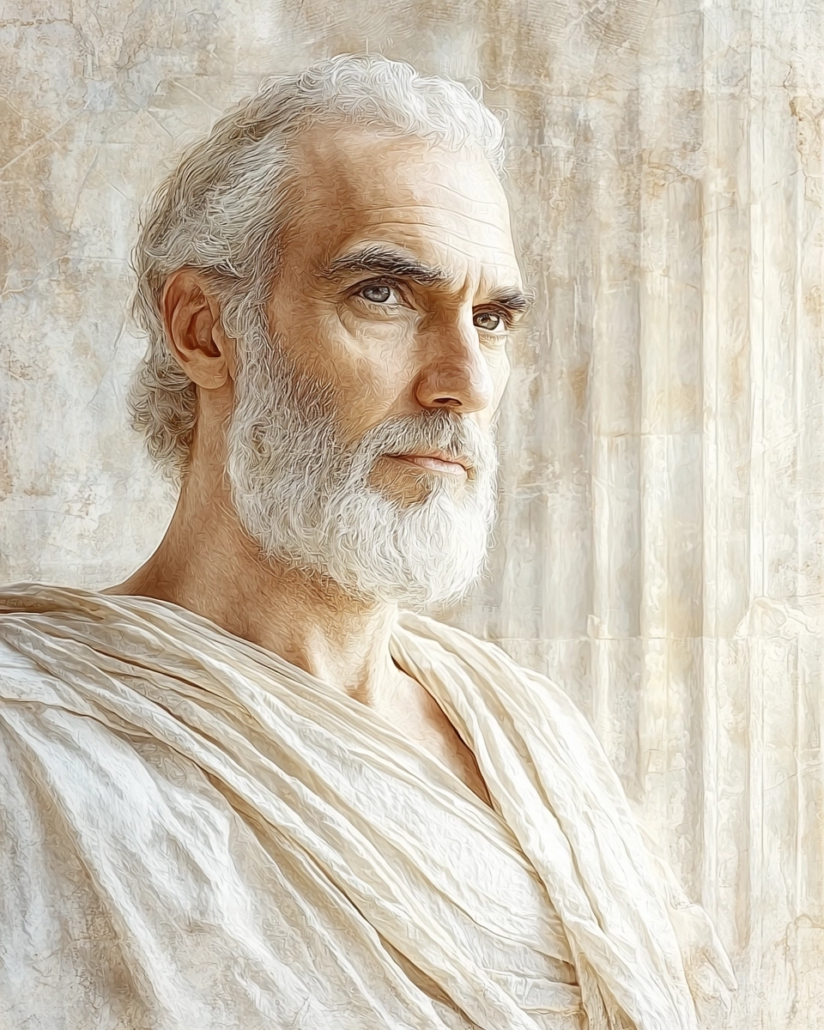
Stylized depiction of Zeno of Tarsus, a Stoic philosopher of the Middle Stoa, known for his teachings on ethics and cosmic order. His legacy emphasizes cardinal virtues like justice and wisdom and inspires with quotes on moral responsibility and the connection between humanity and nature.

Historical Context and Influence

Zeno lived and taught primarily in Athens, where he led the Stoic school and mentored students who further developed Stoic ideas. One of his best-known disciples was Panaetius, who later introduced Stoicism to Rome. Zeno’s work significantly influenced Stoic views on ethics and logic. Deepen: Wikipedia

Why are his teachings and views so valuable?

Zeno’s teachings on the mastery of thought and the role of inner peace remain relevant today. His philosophy serves as a guide for those seeking serenity in a busy world and emphasizes personal resilience and ethical grounding. Read more: The Power of Stoic Principles in Everyday Life

Key Teachings

Zeno’s philosophy centered on several key ideas:

  • Virtue as the Highest Good: Zeno believed that virtue was the only true path to a fulfilling life.
  • The Role of Reason: He viewed reason as essential for managing emotions and leading a harmonious life.
  • Practical Philosophy: Zeno encouraged applying philosophy directly in daily life, not just as theory.

Legacy

  • “Zeno influenced not only his students but also later thinkers like Panaetius and Poseidonius.”
  • “His ideas about reason and emotional control deeply shaped Stoic ethics.”
  • “Through his teachings on discipline, Zeno’s impact on ethics and modern philosophy has endured.”

Stoic cardinal virtues that he embodied

  • “Wisdom – Zeno valued knowledge and logical thinking highly.”
  • “Justice – He emphasized fair and respectful relationships with others.”
  • “Courage – Zeno adhered steadfastly to his principles.”
  • “Temperance – Self-control and moderation were crucial in his teachings.”

Quotes attributed to him

  • “Reason is the compass to a virtuous life.”
  • “A life in harmony with nature is a life well-lived.”
  • “True wealth is found in inner tranquility.”

More: Stoic Wisdom

Continue your stoic journey: Discover the wisdom of Diotimus the Stoic.

Stoic principles & inspirations

  • Shop for Stoicism Enthusiasts
  • Recommended Books on Stoic Philosophy
  • The Four Cardinal Virtues
  • Notable Representatives of Stoic Philosophy
Back to the content:
I Zeno of Tarsus: Life and Teachings of a Stoic Thinker 🌿
II Insights into a Stoic Mind
III Historical Context and Influence
IV Why are his teachings and views so valuable?
V Key Teachings
VI Legacy
VII Stoic cardinal virtues that he embodied
VIII Quotes attributed to him
IX Stoic principles & inspirations
  • Share on Facebook
  • Share on X
  • Share on WhatsApp
  • Share on Pinterest
  • Share on LinkedIn
  • Share on Tumblr
  • Share on Reddit
  • Link to Instagram
Search Search

Latest articles

  • Symbolic article image on Sun Tzu in everyday life, orientation instead of control, and reality as shifting terrain
    Φ ⋮ Sun Tzu in Everyday Life: Orientation, Not Controlby: Stay-Stoic
  • Atmospheric hero image for equanimity, unagitated sovereignty, and quiet presence in a culture of visible agitation
    Φ ⋮ Equanimity in an Age of Constant Agitationby: Stay-Stoic
  • Symbolic image about inner interpretation, cognitive bias, and how small events continue unfolding in the mind.
    Φ ⋮ When Interpretation Turns Events Into Storiesby: Stay-Stoic
  • Conceptual image about self-presentation, visibility, and the quiet exhaustion of constant readability.
    Φ ⋮ Self-Presentation and the Fatigue of Showingby: Stay-Stoic
  • Aging as maturity and life review, focusing on experience, inner clarity, and the yield of lived life
    Φ ⋮ Aging as the Harvest Time of Lifeby: Stay-Stoic

Legal information

· Disclaimer

· Copyright & Protection

· Data privacy statement

· Imprint

Stay-Stoic

· About Stay-Stoic

· Author Profile

· Contact

· Support

· Recommend

Stoic Reflections

· Symbolism & Symbols

· Stoic Affirmations

· Tenets of the Stoa

· The Stoic Signpost

Stores & Reading

· Store for Stoics

· Stoic Literature

· Stoic Glossary

· Read a random article

Copyright by Stay-Stoic | All Rights Reserved
  • Link to X
  • Link to Instagram
  • Link to Pinterest
Scroll to top Scroll to top Scroll to top