
Stay-Stoic
  • 🏛️
  • New Posts
  • Philosophy
    • Stoic foundations
    • Four cardinal virtues
      • Stoic wisdom
      • Stoic justice
      • Stoic courage
      • Stoic moderation
    • Stoicism Today
    • Stoic practices
    • Stoic Topics
  • Inspiration
    • Stoic philosophers
    • Stoic wisdoms
    • Stoic quotes
    • Symbolism & Symbols
    • Stoic Glossary
    • About Stay-Stoic
  • German
  • Click to open the search input field Click to open the search input field Search
  • Menu Menu
  • Link to X
  • Link to Instagram
  • Link to Pinterest
You are here: Home1 / Great Philosophers of Stoicism 🌟2 / Aulus Persius Flaccus: Stoic Poet and Satirist 🎭
Stoicism: Wisdom and virtues such as tranquility, inspiration, and quotes from the Stoa, presented on Stay-Stoic.

Explore the Satirical Stoicism of Aulus Persius Flaccus 🎭

Stoic Poet and Satirist

Aulus Persius Flaccus (born 34 CE – died 62 CE) was a prominent Stoic poet of ancient Rome, renowned for his satirical works that sharply critique the moral failings and superficial values of his time. As a follower of Stoicism, Persius infused his poetry with teachings on virtue, inner calm, and the pursuit of wisdom over wealth and pleasure.
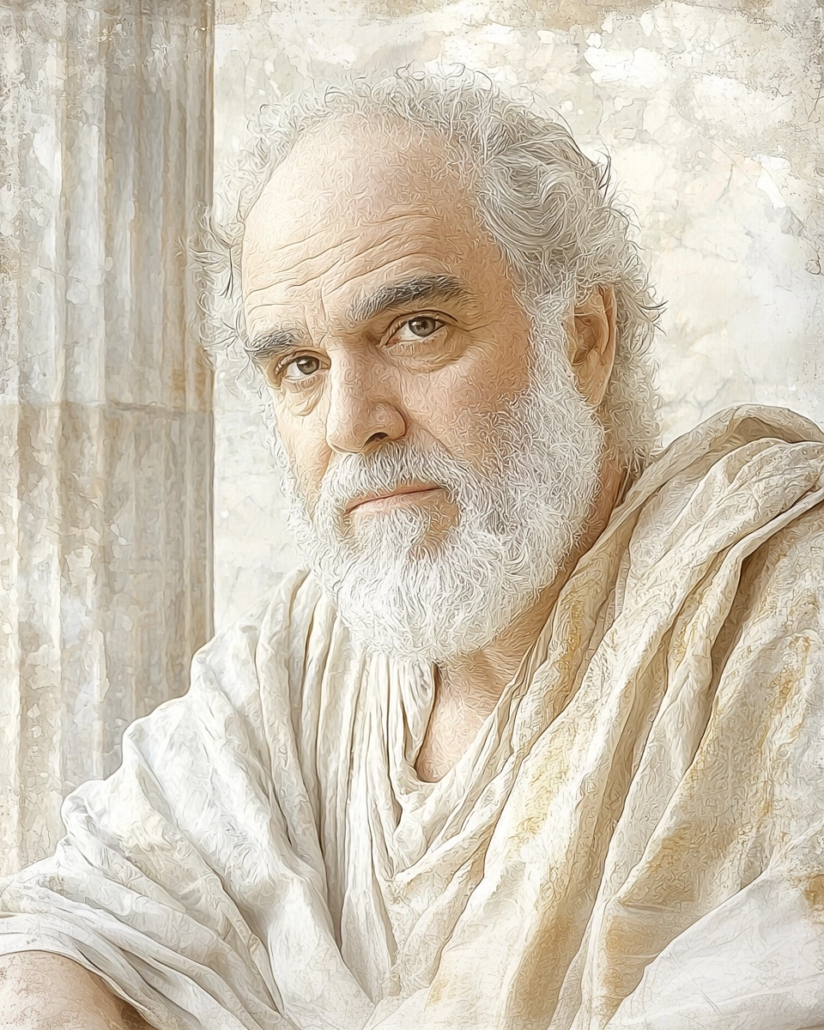
Stylized depiction of Aulus Persius Flaccus, a Roman poet and Stoic, known for his satirical works emphasizing moral values and virtues. His legacy highlights cardinal virtues like wisdom and justice and inspires with quotes on inner reflection and rejecting superficiality.

Historical Context and Influence

Born in Volterra, Italy, Persius was greatly influenced by his teacher Lucius Annaeus Cornutus, a respected Stoic philosopher who helped him shape his philosophical views. Through Cornutus’s guidance, Persius embraced Stoic teachings and developed a strong moral compass, which he famously expressed through his work, The Satires. This collection critiqued the excesses and ethical shortcomings of Roman society, gaining recognition for its boldness and depth. Deepen: Wikipedia

Why are his teachings and views so valuable?

Persius’s teachings on self-mastery and the dangers of vanity remain strikingly relevant. His philosophy encourages readers to seek inner stability and live true to their values rather than external expectations. In a world of distractions, Persius’s work offers a guide to living with purpose and resilience. Read more: Stoicism Today: Living with Purpose

Key Teachings

Persius’s philosophy focused on the need for self-awareness and discipline. He emphasized that true happiness arises from virtue and inner peace rather than external wealth or fame. Through his verses, this Stoic poet advocated for a life guided by integrity and reason, challenging readers to confront their own moral failings.

Legacy

  • “Persius inspired later writers and philosophers, including Juvenal and Seneca, who drew upon his insights into human nature.”
  • “His ideas on the importance of moral integrity deeply influenced Stoic thought.”
  • “Through his Satires, Persius continues to impact discussions on virtue and ethical behavior.”

Stoic cardinal virtues that he embodied

  • “Wisdom – Through his piercing insights, Persius demonstrates the importance of understanding one’s true self.”
  • “Justice – His critiques of societal corruption reflect his commitment to truth and integrity.”
  • “Self-discipline – Persius advocates mastery over one’s desires as essential to true freedom.”
  • “Courage – His bold satires exemplify moral courage and fearless expression.”

Quotes attributed to him

  • “True wealth lies in having few desires.”
  • “Only in mastering oneself can one find true freedom.”
  • “He who understands himself is stronger than the one who conquers others.”

More: Stoic quotes

Continue your stoic journey: Discover the wisdom of Cleomedes.

Stoic Principles & Inspirations

  • Stoic Lifestyle Store: Explore Inspired Gear
  • Books on Stoic Philosophy and More
  • The Four Cardinal Virtues Explained
  • Famous Stoics and Their Teachings
Back to the content:
I Explore the Satirical Stoicism of Aulus Persius Flaccus 🎭
II Stoic Poet and Satirist
III Historical Context and Influence
IV Why are his teachings and views so valuable?
V Key Teachings
VI Legacy
VII Stoic cardinal virtues that he embodied
VIII Quotes attributed to him
IX Stoic Principles & Inspirations
  • Share on Facebook
  • Share on X
  • Share on WhatsApp
  • Share on Pinterest
  • Share on LinkedIn
  • Share on Tumblr
  • Share on Reddit
  • Link to Instagram
Search Search

Latest articles

  • Symbolic article image on Sun Tzu in everyday life, orientation instead of control, and reality as shifting terrain
    Φ ⋮ Sun Tzu in Everyday Life: Orientation, Not Controlby: Stay-Stoic
  • Atmospheric hero image for equanimity, unagitated sovereignty, and quiet presence in a culture of visible agitation
    Φ ⋮ Equanimity in an Age of Constant Agitationby: Stay-Stoic
  • Symbolic image about inner interpretation, cognitive bias, and how small events continue unfolding in the mind.
    Φ ⋮ When Interpretation Turns Events Into Storiesby: Stay-Stoic
  • Conceptual image about self-presentation, visibility, and the quiet exhaustion of constant readability.
    Φ ⋮ Self-Presentation and the Fatigue of Showingby: Stay-Stoic
  • Aging as maturity and life review, focusing on experience, inner clarity, and the yield of lived life
    Φ ⋮ Aging as the Harvest Time of Lifeby: Stay-Stoic

Legal information

· Disclaimer

· Copyright & Protection

· Data privacy statement

· Imprint

Stay-Stoic

· About Stay-Stoic

· Author Profile

· Contact

· Support

· Recommend

Stoic Reflections

· Symbolism & Symbols

· Stoic Affirmations

· Tenets of the Stoa

· The Stoic Signpost

Stores & Reading

· Store for Stoics

· Stoic Literature

· Stoic Glossary

· Read a random article

Copyright by Stay-Stoic | All Rights Reserved
  • Link to X
  • Link to Instagram
  • Link to Pinterest
Scroll to top Scroll to top Scroll to top