
Stay-Stoic
  • 🏛️
  • New Posts
  • Philosophy
    • Stoic foundations
    • Four cardinal virtues
      • Stoic wisdom
      • Stoic justice
      • Stoic courage
      • Stoic moderation
    • Stoicism Today
    • Stoic practices
    • Stoic Topics
  • Inspiration
    • Stoic philosophers
    • Stoic wisdoms
    • Stoic quotes
    • Symbolism & Symbols
    • Stoic Glossary
    • About Stay-Stoic
  • German
  • Click to open the search input field Click to open the search input field Search
  • Menu Menu
  • Link to X
  • Link to Instagram
  • Link to Pinterest
You are here: Home1 / Great Philosophers of Stoicism 🌟2 / Dionysius the Renegade: A Stoic Turnaround 🎭
Stoicism: Wisdom and virtues such as tranquility, inspiration, and quotes from the Stoa, presented on Stay-Stoic.

Dionysius the Renegade: From Skepticism to Stoic Wisdom 🎭

A Stoic Turnaround

Dionysius the Renegade (born c. 3rd century BCE) was a philosopher known for his dramatic shift from Stoicism to Cyrenaicism. This unusual transition earned him the moniker “the Renegade.” His early Stoic teachings emphasized self-control and rationality, while his later life explored more hedonistic perspectives, creating a fascinating juxtaposition within his philosophical journey.
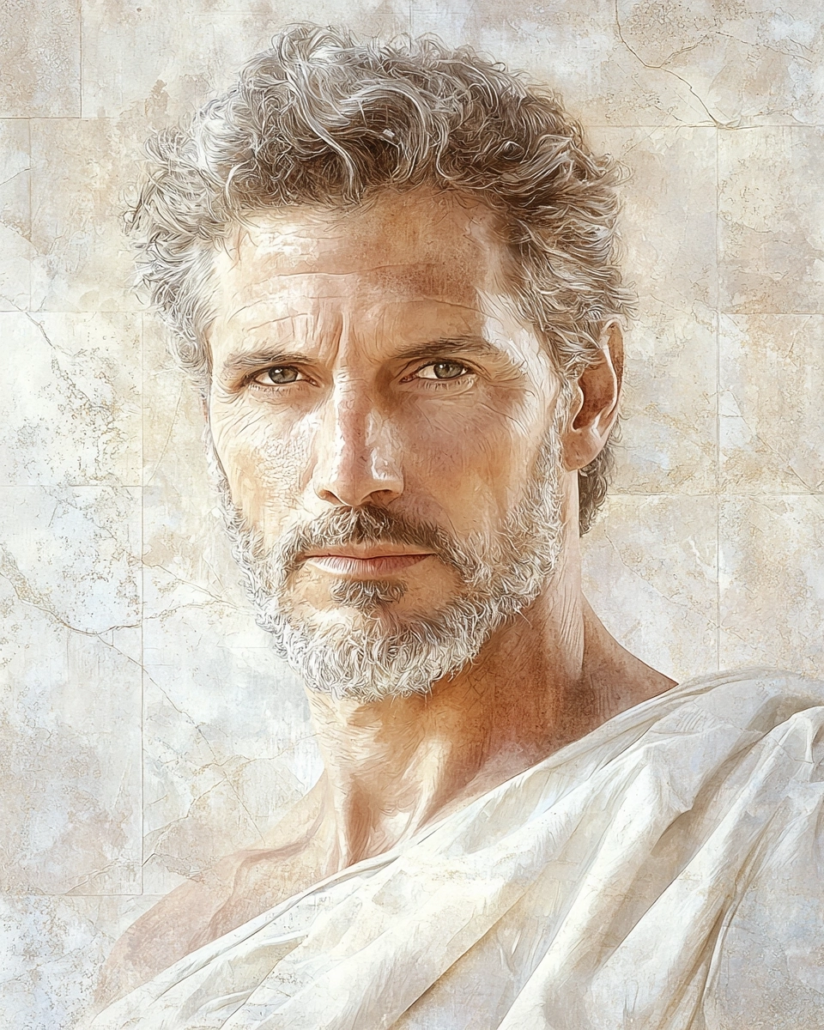
Stylized depiction of Dionysios Metathemenos, a Stoic philosopher known for his epithet ‘the Mutable’ and his focus on adapting to life’s changes. His legacy emphasizes virtues like prudence and resilience and inspires with quotes on endurance and accepting fate.

Historical Context and Influence

Dionysius was initially a student of Zeno of Citium, the founder of Stoicism. Born in Heraclea, he gained prominence in Athens, where he actively engaged with other philosophers. Despite his eventual divergence, his early works contributed to discussions on ethics and human nature within the Stoic framework. His life demonstrates the philosophical struggles of reconciling rigid principles with personal desires. Deepen: Wikipedia

Why are his teachings and life still relevant?

Dionysius’ life story is a compelling reminder that philosophical inquiry is not static. His transition between schools of thought reflects the dynamic nature of personal beliefs and the challenges of living a consistent ethical life. For modern audiences, his journey underscores the value of examining one’s convictions and adapting to new insights. Read more: Stoicism Today.

Key Teachings

Although Dionysius eventually moved away from Stoicism, his early teachings focused on:

  • Self-control: Advocating for mastery over emotions to align actions with reason.
  • Practical wisdom: Emphasizing the importance of rational thought in ethical decision-making.
  • Resilience: Encouraging individuals to withstand external hardships with inner strength.

These ideas formed the bedrock of his philosophical exploration before his shift to hedonistic principles in Cyrenaicism.

Legacy

  • “Dionysius’ departure from Stoicism provided a critical perspective on its limitations.”
  • “His early Stoic teachings influenced subsequent debates on ethics and human desires.”
  • “By challenging established norms, he inspired later thinkers to question rigid philosophical frameworks.”

Stoic cardinal virtues that he embodied

  • “Courage – in challenging established beliefs and exploring new philosophical paths.”
  • “Wisdom – in engaging deeply with Stoic principles before redefining his own.”
  • “Resilience – in navigating personal and philosophical contradictions.”
  • “Honesty – in acknowledging the limitations of his initial beliefs.”

Quotes attributed to him

  • “Philosophy is not about agreeing but about questioning.”
  • “What good is reason if it cannot address the desires of the heart?”
  • “A life unexamined is incomplete; a life unchanged is unfulfilled.”

More: Stoic Wisdom

Continue your stoic journey: Discover the wisdom of Hermagoras of Amphipolis.

Stoic principles & inspirations

  • Shop of the Stoa
  • Explore Stoic Literature
  • The Four Cardinal Virtues
  • Famous Stoics
Back to the content:
I Dionysius the Renegade: From Skepticism to Stoic Wisdom 🎭
II A Stoic Turnaround
III Historical Context and Influence
IV Why are his teachings and life still relevant?
V Key Teachings
VI Legacy
VII Stoic cardinal virtues that he embodied
VIII Quotes attributed to him
IX Stoic principles & inspirations
  • Share on Facebook
  • Share on X
  • Share on WhatsApp
  • Share on Pinterest
  • Share on LinkedIn
  • Share on Tumblr
  • Share on Reddit
  • Link to Instagram
Search Search

Latest articles

  • Symbolic article image on Sun Tzu in everyday life, orientation instead of control, and reality as shifting terrain
    Φ ⋮ Sun Tzu in Everyday Life: Orientation, Not Controlby: Stay-Stoic
  • Atmospheric hero image for equanimity, unagitated sovereignty, and quiet presence in a culture of visible agitation
    Φ ⋮ Equanimity in an Age of Constant Agitationby: Stay-Stoic
  • Symbolic image about inner interpretation, cognitive bias, and how small events continue unfolding in the mind.
    Φ ⋮ When Interpretation Turns Events Into Storiesby: Stay-Stoic
  • Conceptual image about self-presentation, visibility, and the quiet exhaustion of constant readability.
    Φ ⋮ Self-Presentation and the Fatigue of Showingby: Stay-Stoic
  • Aging as maturity and life review, focusing on experience, inner clarity, and the yield of lived life
    Φ ⋮ Aging as the Harvest Time of Lifeby: Stay-Stoic

Legal information

· Disclaimer

· Copyright & Protection

· Data privacy statement

· Imprint

Stay-Stoic

· About Stay-Stoic

· Author Profile

· Contact

· Support

· Recommend

Stoic Reflections

· Symbolism & Symbols

· Stoic Affirmations

· Tenets of the Stoa

· The Stoic Signpost

Stores & Reading

· Store for Stoics

· Stoic Literature

· Stoic Glossary

· Read a random article

Copyright by Stay-Stoic | All Rights Reserved
  • Link to X
  • Link to Instagram
  • Link to Pinterest
Scroll to top Scroll to top Scroll to top